
Summary
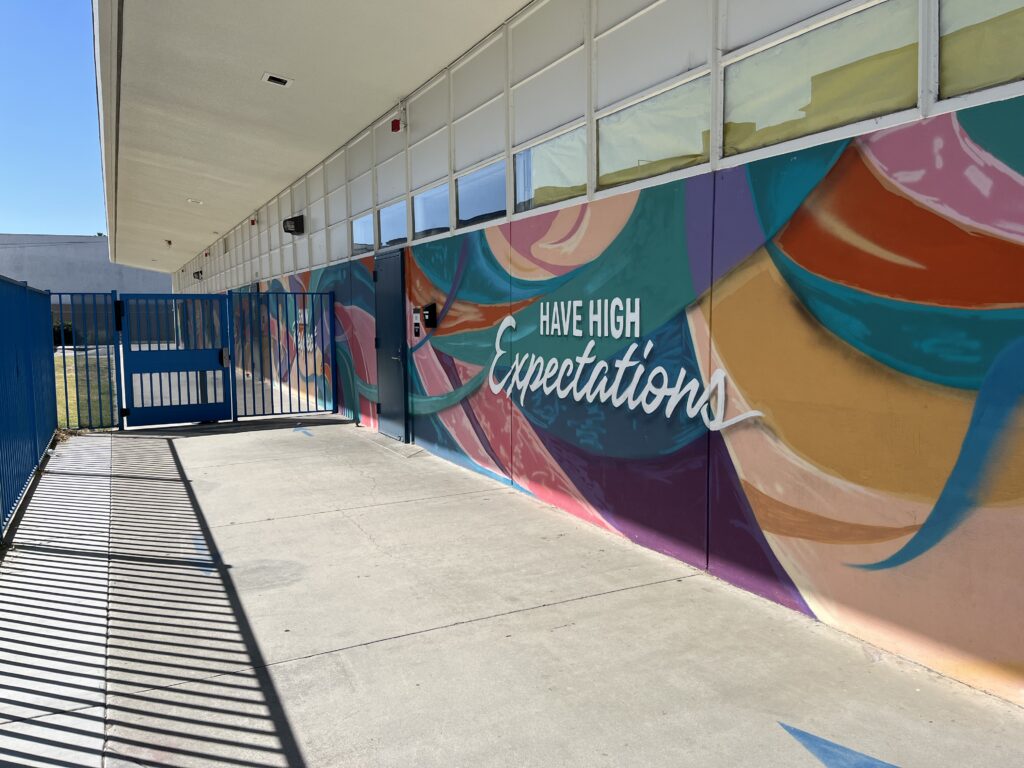
When a Southern California school district needed a reliable partner to manage the removal and redistribution of surplus furniture across multiple campuses, they turned to Furniture Reuse Solutions (FRS). Over five days, twelve schools needed to be cleared out to make way for new furniture. A district contact who had worked with FRS in the past knew our team could handle the scale and complexity of the project.
Challenge
This project required extensive planning due to complex logistics. Many school sites had difficult truck access, requiring creative staging solutions to ensure smooth pickups. Some locations had outdated elevators, long hallways, or stairs, adding to the physical demands on the crew.
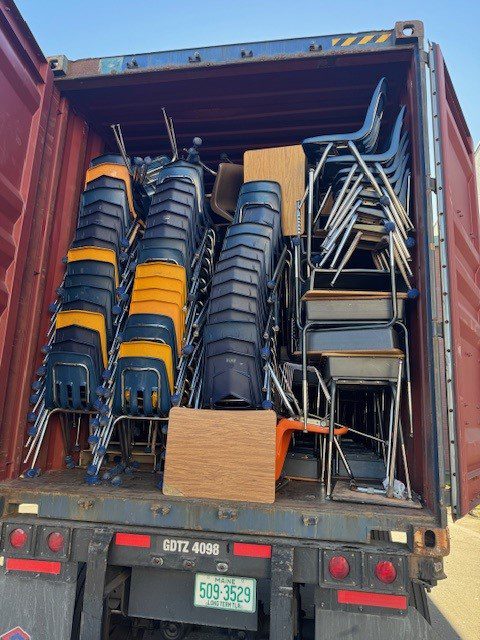
Timing was also critical. In most cases, FRS had full access before the installation teams arrived, but in others, careful coordination was needed to avoid overlap and keep everything moving efficiently. Additionally, every item had to be packed as efficiently as possible for international shipment.
| Type | Qty | Weight |
|---|---|---|
| Chair | 3,070 | 43,566 |
| Desk | 3,073 | 90,596 |
| Table | 3 | 135 |
| Total | 6,146 | 134,297 |
Solution
To stay on track, FRS deployed two project managers and two move crews, working in tandem to adjust as conditions changed. The crews handled the physical work while FRS’s back office staff managed truck schedules, monitored progress and adjusted plans in real time.
Throughout the project, FRS collaborated with the district’s furniture vendor, ensuring that as old furniture was removed, space was immediately ready for the new. Aligning schedules between the two teams helped avoid bottlenecks and kept the installation process running smoothly.

Outcome
The project was successfully completed on schedule, enabling the District to avoid costs associated with ongoing storage and disposal. We worked closely with a global non-profit to arrange for the transport and distribution of decommissioned assets to nine under-resourced communities in six countries. By choosing donation and creative reuse, the District enriched the lives and learning experiences of thousands of students around the globe.
Environmental Impact
Our efforts prevented nearly 61 metric tons of various materials such as plastic, composite and metal, from entering the landfill, ultimately preventing the release of harmful chemicals and greenhouse gasses that occur during decomposition and incineration.
Additionally, reusing these materials conserves resources and energy that would otherwise be expended in producing new items, thus minimizing the overall carbon footprint associated with manufacturing and waste management.
By partnering with FRS, the District offset an estimated 172 metric tons CO2e, equivalent to driving 438,000+ miles in the average gas-powered passenger vehicle.
CO2e Offset
We achieved an estimated C02e offset of 172 metric tons, which is equal to approximately: